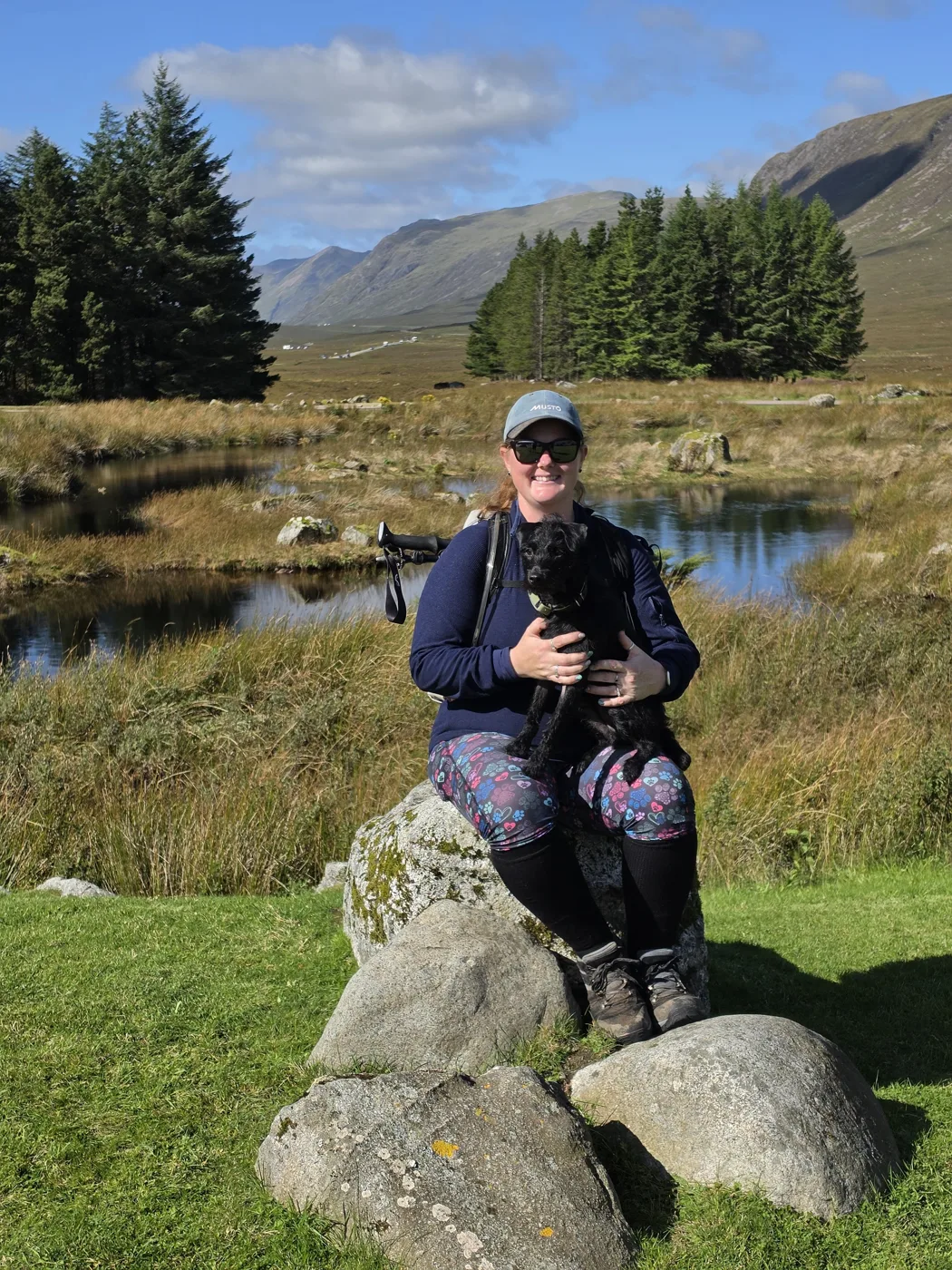

Katie Louise Hewetson, who broke her back at 20, walked the West Highland Way for her Warsash grandad Jimmy Knott, who died with Lewy body dementia in 2024.
Katie Louise Hewetson broke her back in three places in a riding accident shortly before her 21st birthday. Now 34, living with a serious degenerative spinal condition and facing major spinal surgery, she has walked almost 100 miles of the West Highland Way in memory of her grandfather from Warsash.
Michael James Knott, known as Jimmy to his friends and “Jimmer” to Katie Louise, died with Lewy body dementia in 2024 at the age of 85. He was born and bred in Warsash.
She walked the route from Milngavie to Fort William over seven walking days, largely alone, with her small terrier Ernie beside her for much of the way. The walk raised money for the Lewy Body Society, the charity that funds research into the condition and supports families living with it.
“My granddad was my world,” Katie Louise said. “We were very, very close. He was always with me with the horses and he never missed a competition. We did everything together.”
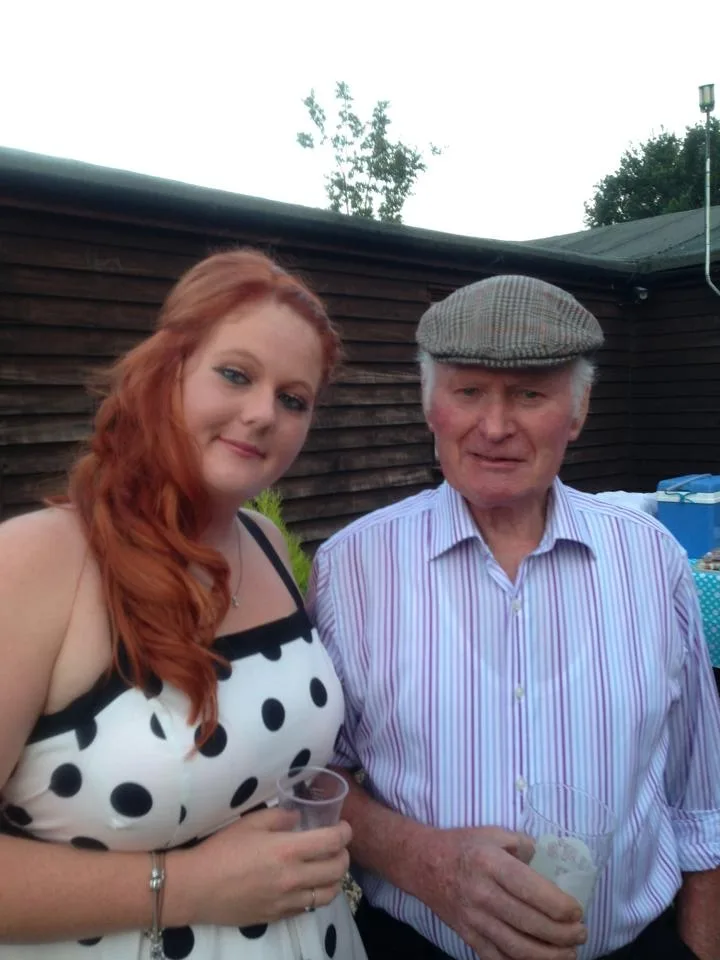
A Warsash boatbuilder who kept horses and goats
Jimmy was a former Southampton boatbuilder and, in the family’s words, an intensely practical, outdoors-loving man. He grew fruit and vegetables, made hay, repaired vehicles and machinery, and kept horses, goats and Jack Russells.
Katie Louise shared his love of animals and the countryside, and the two of them walked together for hours, often several times a week. That is why she chose a long walk.
“I wanted to do something that would have meant something to him,” she said. “If he was still with us, he would be walking it with me. He wouldn’t just have been saying, ‘Kate’s doing that.’ He would have been there every step of the way.”
“Get on with it, Kate”
Katie Louise moved from Southampton to Muirkirk in East Ayrshire last year. The West Highland Way took her over mountains and long stretches of rough, rocky ground, and as the days went on the pain in her feet became so bad that putting her boots on in the morning reduced her to tears.
“I would sit there for about 20 minutes and cry until my feet went numb,” she said.
At the worst points she thought about what her grandfather would have said to her.
“I could hear him saying, ‘Get on with it, Kate. Get on with it.’ I’d be saying, ‘I’m going, I’m going.’”
Her mother travelled along the route to give practical support, and her 12-year-old son Alfie phoned to encourage her through the final miles. For most of the walking, though, it was just Katie Louise and Ernie.
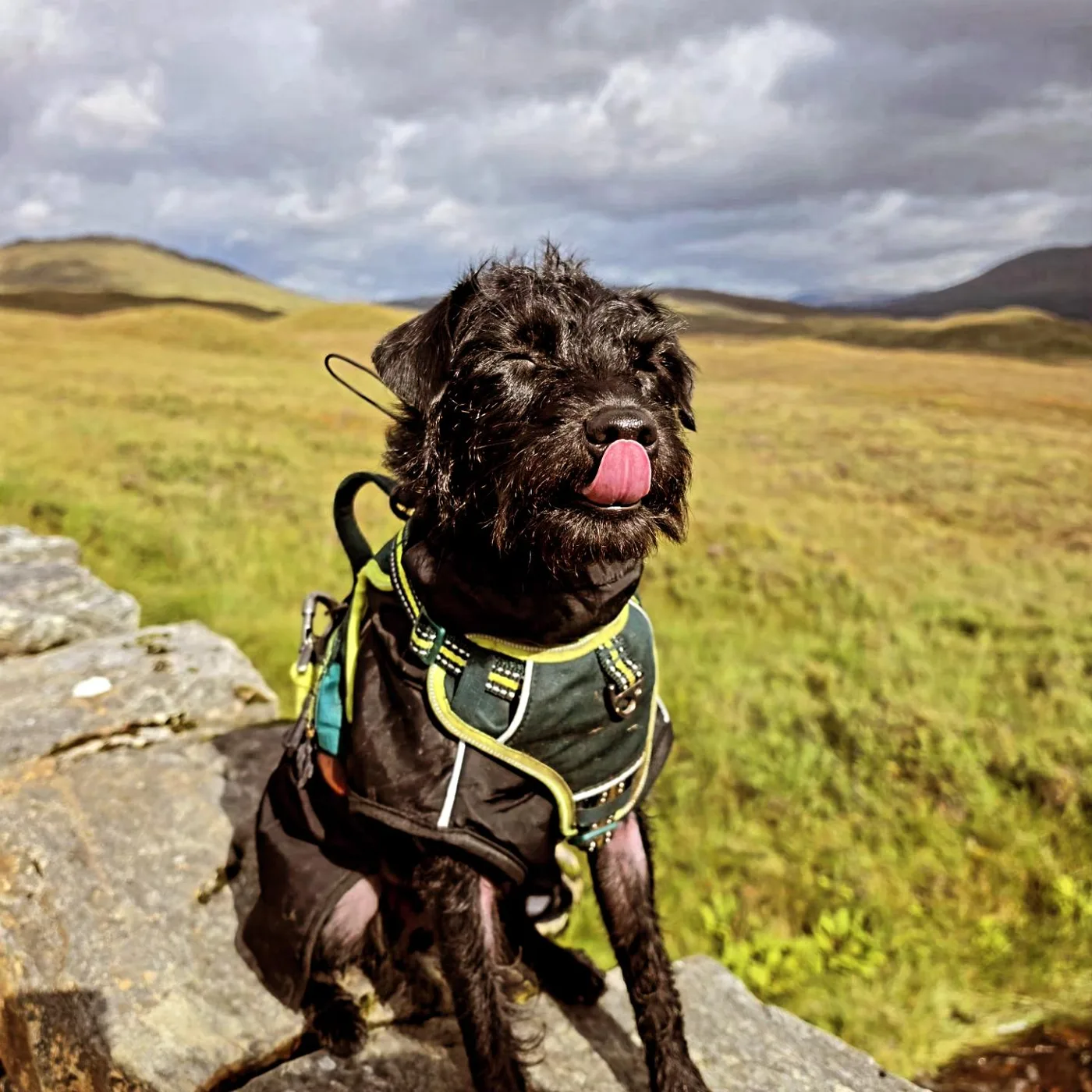
“I was tired, exhausted, cold, wet and hungry,” she said. “I was doing absolutely fine until I saw my mum at the finish, and then I just started crying.”
A dementia that started with a shuffle
Jimmy’s first symptoms were mostly physical. His family noticed that his walk had become a shuffle and that his tremors and his balance were getting worse. He was first assessed for Parkinson’s disease, and it was only when hallucinations and other symptoms appeared that he was diagnosed with Lewy body dementia.
“For probably the first year, it was more the physical things that affected him than the mental things,” Katie Louise said. “Then he really started to decline mentally. The last six or eight months were heartbreaking.”
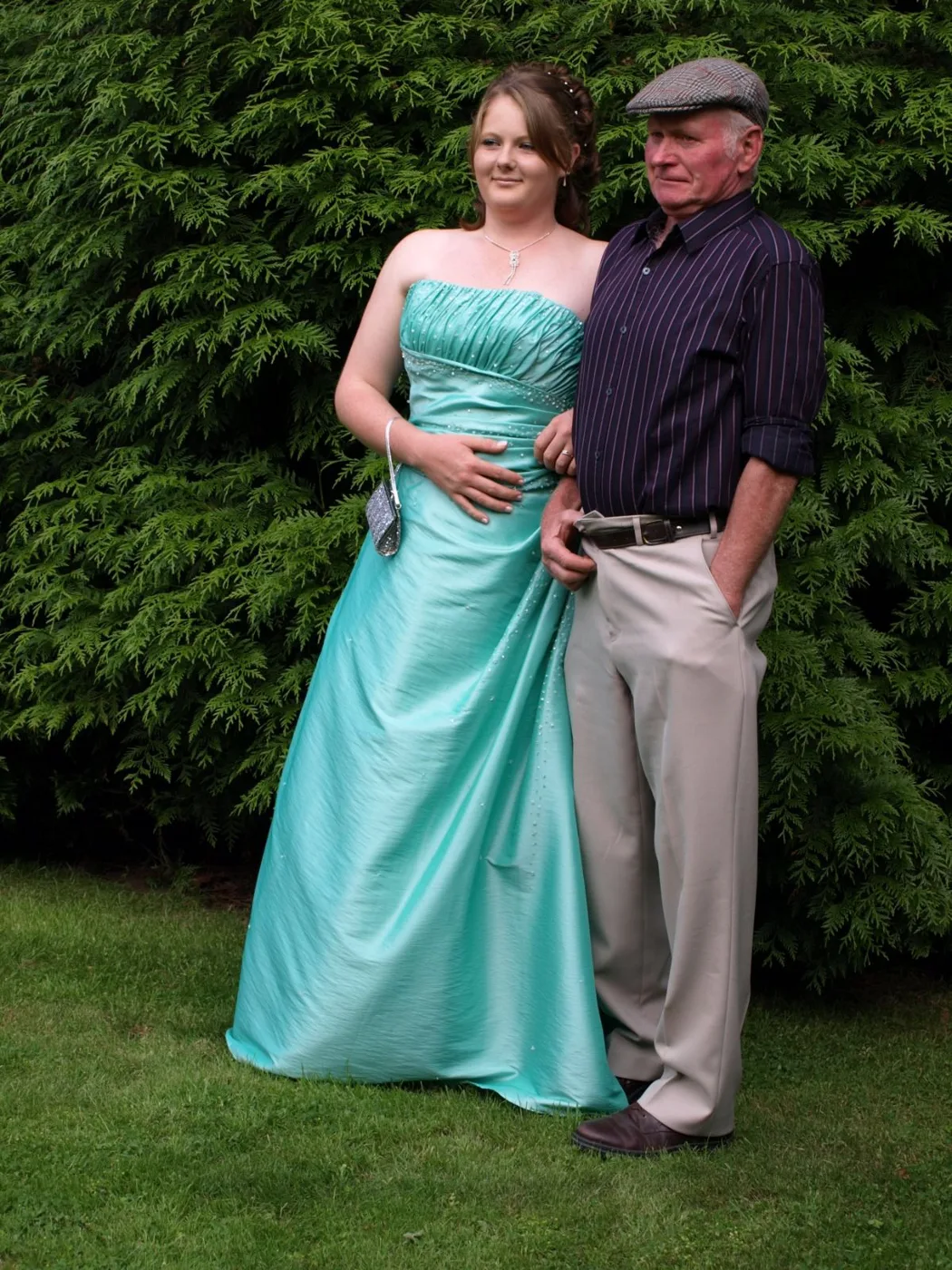
She had never heard of Lewy body dementia before his diagnosis, and that is the reason she wanted the walk to raise awareness as well as money.
“Until you have experienced it, you don’t know what it is,” she said. “The person who has Lewy body dementia frequently isn’t in a position to speak about it, so it has to come from people who have been there.”
What the charity says about the condition
The Lewy Body Society, which says it was the first charity in Europe dedicated to the condition, describes Lewy body dementia as “the most common disease you’ve never heard of”. According to the charity:
- it is the second most common type of neurodegenerative dementia in older people, and accounts for 15 to 20% of all cases of dementia
- it affects memory, thinking, movement, sleep and behaviour
- it can be misdiagnosed as Alzheimer’s or Parkinson’s disease
- someone with dementia who also has visual hallucinations, swings in alertness, sleep problems or movement difficulties may have it, and needs an accurate diagnosis and specialist care
The charity funds research at UK universities into diagnosis, treatment and care, and gives information and support to people with the condition and their carers. More is on its website at lewybody.org.
Katie Louise’s JustGiving page showed £885 from 29 donations when we checked on 26 October 2026.
Have your say